
The first time someone hears "high-risk pregnancy" from their doctor, a bit of panic is pretty natural. But here's the thing—that label isn't a verdict that something's wrong. It's really just a signal that this particular pregnancy calls for extra attention, because certain factors push up the odds of complications for the mother, the baby, or occasionally both. Once you actually understand what lands a pregnancy in this category, a lot of that initial fear tends to fade on its own.
What Makes a Pregnancy High-Risk?
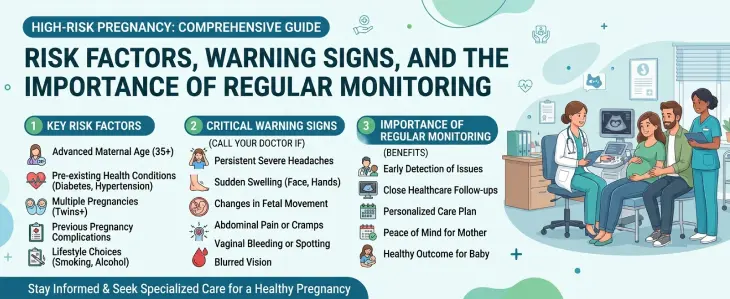
A pregnancy gets the high-risk label when certain factors raise the odds of complications, whether that's during the pregnancy itself, at delivery, or in the days right after birth. That doesn't mean something's bound to go wrong. It just means the doctor keeps a closer eye on things, orders a few extra tests along the way, and adjusts care as needed, all with the goal of catching problems early instead of waiting for symptoms to show up first.
This classification can trace back to a health condition that already existed, something that shows up during the pregnancy itself, or just certain circumstances tied to the pregnancy, like age being a common one, or a history of complications from before.
Common Risk Factors in a High-Risk Pregnancy
Maternal age
The first consultation with a gynecologist will take place during the period of adolescence. Extensive examination will not be required, but rather discussion about education-related issues concerning puberty and menstruation.
Gestational diabetes
This one shows up during pregnancy itself and needs steady monitoring, since blood sugar that isn't kept in check can affect both the mother and how the baby grows.
Pregnancy-induced hypertension and preeclampsia
Blood pressure that climbs during pregnancy, sometimes turning into preeclampsia, sits high on the list of things doctors watch closely. Left alone, it can mess with blood flow to the placenta and cause complications for both mother and baby.
Multiple pregnancies
Carrying twins, triplets, or more naturally raises the risk of preterm labor, low birth weight, and a few other complications, simply because the body's handling more than one baby at once.
Previous pregnancy complications
A past history of preterm birth, miscarriage, stillbirth, or other complications usually means closer monitoring the next time around, even if the current pregnancy seems to be going fine.
Placental issues
Things like placenta previa, where the placenta covers part or all of the cervix, or placental abruption, where it pulls away from the uterine wall too soon, both need careful watching and sometimes a change in how delivery gets planned.
Lifestyle and other factors
Smoking, substance use, obesity, and certain infections during pregnancy can raise risk too. Some of this is actually manageable with the right medical guidance, which is exactly why getting into prenatal care early matters so much.
Warning Signs That Need Immediate Medical Attention
Some symptoms during pregnancy shouldn't sit around waiting for a scheduled visit. These call for getting checked right away:
- Severe or ongoing headaches, especially with changes in vision
- Vaginal bleeding, at any point
- Severe pain in the abdomen or pelvis
- Noticeably less fetal movement than usual, especially later on
- Fever, chills, or other signs of infection
- Sudden, severe trouble breathing
- Contractions before 37 weeks
If any of these show up out of nowhere or get worse quickly, that's enough reason to call a doctor right then instead of waiting for the next appointment.
Why Regular Monitoring Matters in a High-Risk Pregnancy
Here's the thing about monitoring in a high-risk pregnancy: it's really about catching problems while they're still small, way before they turn into something that lands you in the emergency room. Every check-up gives the doctor another data point: blood pressure today, blood sugar next time, and how the baby's growing the visit after that. Put those together over weeks and months, and you get a much clearer picture than any single appointment could give on its own.
And when something does start shifting, this kind of steady watching means it gets caught fast. Maybe a dose needs adjusting. Maybe there's a test worth adding that wasn't planned before. Sometimes the whole delivery plan changes, not because of what was expected back in the first trimester, but because of what's actually happening right now.
Skip a few visits, though, or keep putting things off, and that whole safety net disappears. Nobody's watching for the small changes anymore. That's really the entire reason staying on top of appointments matters so much more here than it would in a pregnancy without any complicating factors.
What High-Risk Pregnancy Monitoring Involves
High-risk pregnancy care usually means more frequent visits than a standard schedule. Depending on what the specific risk factors are, this could mean extra ultrasounds to track how the baby's growing, non-stress tests to check the heart rate, blood pressure checks every single visit, and more frequent bloodwork for things like gestational diabetes.
Some pregnancies also bring in specialists beyond just the obstetrician, depending on what's being managed. The idea throughout is putting together a full, honest picture of how mother and baby are doing, rather than just assuming things are fine between appointments.
Coping With Anxiety After a High-Risk Diagnosis
Hearing that a pregnancy is high-risk usually brings on a wave of worry, and that's a completely fair reaction. It helps to remember the classification exists to get better care in place, not because something bad is bound to happen.
Asking direct questions during appointments, actually understanding what's being monitored and why, and knowing which warning signs to watch for at home—all of that turns uncertainty into something a lot easier to manage. A good care team walks you through the reasoning behind each test and adjustment, instead of just running through a checklist.
Finding the Right Obstetric Care in Gingee
A high-risk pregnancy really does better with steady, attentive care instead of a wait-and-see mindset. Regular monitoring, clear conversations with your doctor, and quick action on warning signs—all of that genuinely changes outcomes for mother and baby.
Sanjeevi Hospital in Gingee provides expert maternity and women's care led by Dr. Divya, a gynaecologist and obstetrician with an MS in Obstetrics and Gynaecology, widely regarded as the best obstetrician in Gingee for high-risk pregnancy management. The hospital is equipped with a fully functional labor suite, NICU facilities, and round-the-clock emergency support, ensuring help is always close at hand. Their approach to high-risk pregnancy care combines regular monitoring, quick access to ultrasound and lab diagnostics, and emergency readiness, all under one roof. For anyone in Gingee seeking the best obstetrician for a high-risk pregnancy or a thorough evaluation, this level of consistent, nearby care makes a challenging journey far more manageable.