
Losing a pregnancy hurts. Losing a second or third one hurts in a different way. You have to find hope again, and the questions get heavier. Did I do something wrong? Will it happen again? Is something wrong with me?
If these questions keep coming to you, you are not alone, and you have not failed at anything. Many more families go through repeated losses than ever talk about them. Many of them still have a healthy baby later. This guide explains what doctors mean by recurrent miscarriage, what usually causes it, which tests help, and when to see a specialist.
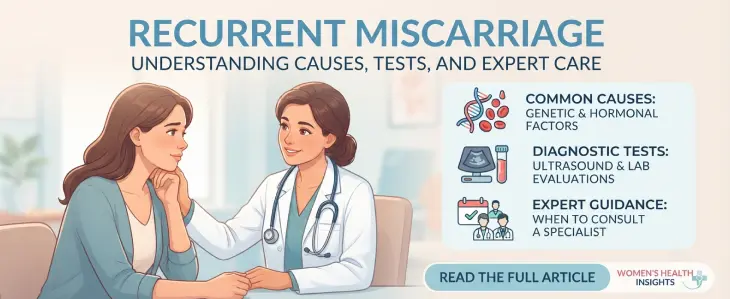
What Is Recurrent Miscarriage (Recurrent Pregnancy Loss)?
Pregnancy loss is more frequent than many people think. Between 10 and 20 percent of recognized pregnancies end in miscarriage, and most of these happen in the first twelve weeks. One miscarriage rarely means a long-term problem, and the next pregnancy is usually normal.
Doctors use the term recurrent pregnancy loss when a woman has lost two or more pregnancies. Some guidelines wait until three losses in a row. Only about 1 percent of couples reach that point. So one or even two losses usually happen by chance. A repeating pattern, however, needs a proper check, because doctors can find and treat some of the causes.
Why Do I Keep Having Miscarriages? 7 Common Causes
Many women quietly ask, Why do I keep having miscarriages? The answer differs from person to person. In about half of couples, doctors find no cause even after full testing. In the other half, one or more of the following causes may be involved.
Chromosomal Abnormalities in the Embryo
These are the major causes of early loss. If the embryo has too many or too few chromosomes, it cannot grow properly, and the pregnancy ends on its own. It happens by chance, and nothing you did caused it. The risk happens especially after 35 and even more after 40.
Antiphospholipid Syndrome (APS) and Blood Clotting
This immune condition makes the blood clot more easily. The clots can block blood flow to the placenta. Doctors treat it with low-dose aspirin and an injectable blood thinner throughout the pregnancy.
Uterine Abnormalities: Septum, Fibroids and Polyps
Some women are born with a wall of tissue (a septum) that divides part of the uterus. Others have fibroids inside the uterine cavity, polyps, or scar tissue from an earlier procedure. These problems can stop an embryo from settling and growing. Treatment can resolve many of them.
Thyroid, Diabetes, PCOS and Other Hormonal Causes
An underactive thyroid, uncontrolled diabetes, high prolactin, and PCOS can all raise the risk of loss. Doctors can usually manage these conditions once they diagnose them.
Cervical Insufficiency (Weak Cervix)
Occasionally the cervix opens too early, often without pain. This causes loss in the second trimester, not in the early weeks. Your doctor may monitor you closely or suggest a stitch to support the cervix.
Genetic Causes: Chromosome Changes in a Parent
In a few couples, one partner carries a rearranged chromosome without any symptoms. The embryo can inherit it in an unbalanced form. A blood test finds this, and genetic counselling follows.
Lifestyle Factors That Affect Miscarriage Risk
Smoking, heavy drinking, high caffeine intake, and obesity are linked to more miscarriages. They rarely cause a loss alone, but changing them before your next pregnancy helps.
Myths: What Does Not Cause Miscarriage
Many women blame themselves, so let us be clear. Daily stress, regular exercise, lifting things at home, travel, and sex do not cause miscarriage. Neither do arguments, sad days, or a missed meal. Most losses happen because the pregnancy was not developing normally from the start. Nothing you did or avoided could have changed that.
Recurrent Miscarriage Tests: What to Expect
Doctors usually begin testing after two or three losses, and sometimes earlier. You will not need every test. A good doctor chooses tests based on your history and does not order a long list.
- Pelvic ultrasound, sometimes a 3D scan: shows the shape of the uterus and any fibroids or polyps.
- Hysteroscopy or HSG: looks inside the uterus when the scan raises a question.
- Antiphospholipid antibody tests: a blood test repeated after at least twelve weeks to confirm the result.
- Thyroid and blood sugar tests: check for hormonal and metabolic causes.
- Prolactin level: useful when periods are irregular.
- Karyotype (chromosome test) for both partners: advised only for some couples.
- Testing of pregnancy tissue: after a future miscarriage, it can show whether the embryo had a chromosome problem.
Some tests, such as wide panels for inherited clotting disorders or immune markers, do not help every patient. If your doctor recommends one, ask why.
Recurrent Miscarriage Treatment by Cause
Each cause needs a different treatment
- Antiphospholipid syndrome: aspirin and a blood thinner during pregnancy.
- Uterine problems: a small procedure to remove a septum, polyp, or scar tissue.
- Thyroid disease or diabetes: medicines and close control, ideally before you conceive.
- Cervical weakness: regular monitoring and, in some cases, a cervical stitch.
- Chromosome changes in a parent: genetic counselling and, for some couples, IVF with embryo testing.
- No cause found: With early scans, regular follow-up and emotional support, most couples with unexplained loss go on to have a healthy baby.
Your doctor may also suggest folic acid before you try again. They can help you review your weight, smoking, alcohol use, and any long-term medicines.
When Should You See a Gynecologist and Obstetrician?
Book a consultation if any of these apply to you:
- You have had two or more miscarriages.
- You lost a pregnancy after ten weeks or had a stillbirth.
- You are 35 or older and have had a loss.
- You have thyroid disease, diabetes, PCOS, lupus, or a clotting disorder.
- Your periods are irregular, or you have had uterine surgery.
- You plan to get pregnant again and want to prepare.
You don’t wait for a third loss. If something feels wrong, see a doctor sooner.
Miscarriage Warning Signs: When to Go to the Hospital
During any pregnancy, go to a hospital at once if you have heavy bleeding that soaks through pads quickly, severe or one-sided belly pain, fever with pain or discharge, fainting, or severe dizziness. Do not wait for a routine appointment.
Coping Emotionally After Repeated Miscarriages
Grief after a miscarriage is real, even when the pregnancy was early. After repeated losses, you may feel anxious about trying again. Partners grieve too, often in a different way. Talk to each other openly. Tell your doctor if sadness, poor sleep, or fear affects your daily life. A counsellor, a trusted family member, or a support group can help. You can take as long as you need to heal.
How to Prepare for Your Gynecologist Appointment
A little preparation makes the visit more useful.
- Write down the date of each loss, how many weeks pregnant you were, and what happened.
- Bring your scan reports, blood tests, and discharge summaries.
- List the medicines and supplements you take.
- Note the age of both partners and any family history of miscarriage, clotting problems, or genetic conditions.
- Write your questions in advance, because they are easy to forget in the consultation room.
Questions to Ask Your Doctor About Recurrent Miscarriage
- How many losses make this recurrent in my case?
- Which tests do I need, and which can I skip?
- Does my age or any health condition change the plan?
- When is it safe to try again?
- What should I do as soon as I get a positive pregnancy test?
Hope After Recurrent Pregnancy Loss: Key Takeaways
Recurrent miscarriage is painful, but it is not the end of the road. Doctors can find and treat many causes. Even when they find none, careful monitoring and support give most couples a good chance of a healthy pregnancy. The most important step is to talk to a doctor who listens, explains clearly, and plans with you.
If you are looking for the best gynecologist & obstetrician in Gingee, Sanjeevi Gastro and Maternity Care Centre is a good place to start. Bring your history, your reports, and your questions. The team can help you understand what may be behind your losses and plan the safest next step.